Articles
Bible Study Guide or Bible Reading Journal: Which Do You Need?
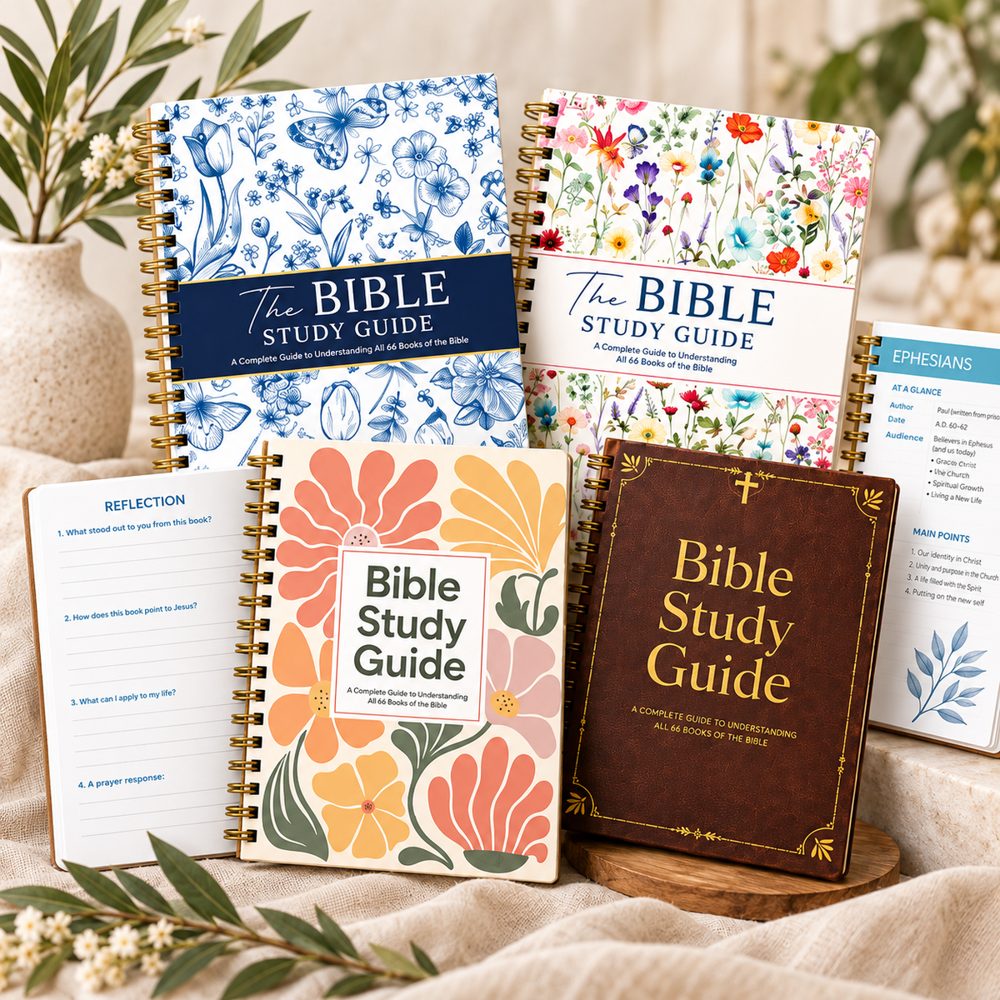
When you decide to take the Bible seriously, you quickly find two kinds of books: study guides and reading journals. They look similar on the shelf, but they do different jobs. Here's how to tell which one you need.
A study guide explains what you're reading
A Bible study guide is a companion that sits next to your Bible. It usually goes book by book, and for each one it gives you the background you'd otherwise have to look up: who wrote it, what happens, who the main characters are, and what it means.
A study guide is the right choice if:
- you open a book of the Bible and don't know what it's about
- you want to understand how the pieces fit together
- you like to read at your own pace, not on a schedule
The Bible Study Guide covers all 66 books this way. Each book gets an overview, key events and characters, a chapter-by-chapter breakdown, a life-application section, a note on how it connects to Jesus, and a notes page.
A reading journal tells you what to read next
A reading journal is built around a plan. It decides the passages for you, week by week, and gives you prompts to reflect and pray as you go.
A reading journal is the right choice if:
- you've started reading the Bible before and stopped
- you want a clear finish line, such as the whole Bible in a year
- you like checking things off and seeing your progress
A Year Through the Bible is a 52-week journal of this kind. Each week pairs your readings with a recap, reflection questions, and prayer and blessing prompts, and it includes full-color summaries of all 66 books. The plan is undated, so you can start any week.
Quick comparison
- Question it answers: the guide answers "what is this book about?"; the journal answers "what do I read this week?"
- Pace: the guide goes at your pace; the journal follows a 52-week plan
- Best for: the guide suits people who want understanding; the journal suits people who want a routine
Can you use both?
Yes, and for beginners that's often the easiest path. The journal tells you what to read this week, and the guide explains the book you're in. Think of the journal as the map and the guide as the tour guide.
Not ready for either?
Start smaller. The free Beginner's SOAP Bible Study Journal gives you 30 days in the Gospels and one simple method. If the habit sticks, you'll know which kind of book you want next.